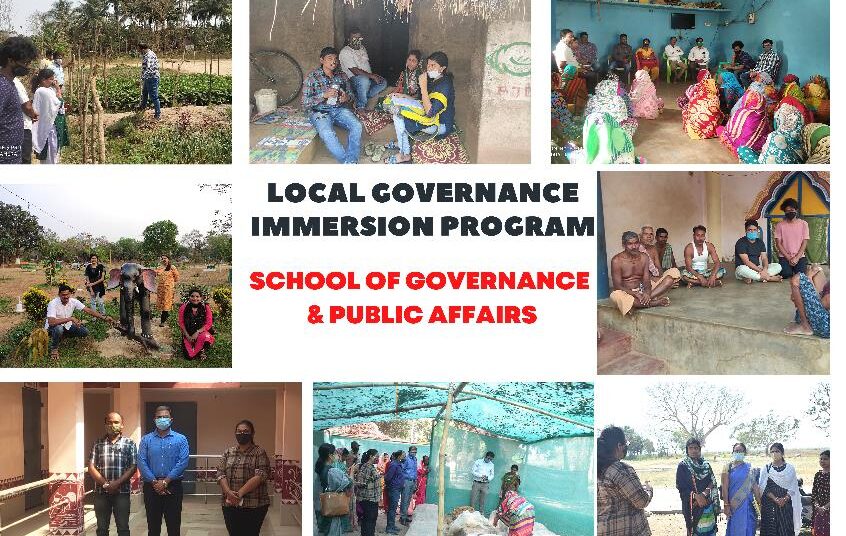
Local Government Immersion Programme (LGIP)
The Local Government Immersion Programme (LGIP) is a credited field-based component of the Master’s Program offered by the School of Governance and Public Affairs (SGPA), XIM University. It reflects the School’s vision of nurturing ethical and transformative leaders in the field of governance and public policy.
LGIP is conducted in the second term of the Master’s programme and provides students with practical exposure to the working of local and state government institutions where policies are planned and implemented. It bridges classroom learning with real-world governance practices, helping students understand the functioning, challenges, and innovations in India’s policy landscape.
LGIP aims to enable the students to:
- Develop an analytical perspective of public governance, the development processes and policy interventions.
- Explore and understand how welfare policy programs work with communities and gain a contextual understanding of policy implementation.
- Critically analyze the gap between policy formulation and execution in view of the challenges faced by government bodies in institutional functioning.
- Apply policy management knowledge to serve the diversity, constraints, and innovation potential in India’s policy landscape.
LGIP Components
The 3 weeks in the field consist of two components, with intent and content as below:
- Personal Reflection Paper – Every student is expected to maintain a daily journal – LGIP Diary – and write and reflect on his / her experience of learning about policy management in real-world setting. Based on their LGIP Diary, every student must prepare a Personal Reflection Paper (PRP), analyzing and reflecting on their personal experience of understanding the dynamics of public governance. Only the Personal Reflection paper (PRP) will be evaluated but the LGIP Diary should be mandatorily submitted by all the students. (1500 words).
- Case Study – Each student should prepare a case study on the working of the government department and the project that includes detailed observation of the meetings, mode of discussion and participation, deliverables and the action taken. The case study can pertain to the current year or the past year’s working of the concerned government body. The case study should be within 1200-1500 words.
- Development Project Learning Report (DPLR)- This consists of the project-based learning, i.e., learning from the assignment / project given by the Host Organization (HO) through the Reporting Officer (RO). The learning that the students got from the HO’s assigned project is to be prepared as a ‘Development Project Report’ and submitted to SGPA Dean Office. This report should add an analytical view and an academic rigor in applying perspectives and understandings learnt in class. The DPLR should have a minimum of 3000 words (excluding cover page, content, reference, annexures etc.). The use of field-based images or narratives is encouraged.
Evaluation
- LGIP carries 4 credits as core components of Master’s Programme, which will be reflected in final grading. The break-up of the evaluation components is mentioned in the following table.
LGIP Components
| Level
| Weightage
|
Personal Reflection Paper | Individual | 20% |
Case Study | Individual | 20% |
LGIP Report | Individual | 30% |
Assessment by Reporting Officer (RO) at Host Organization (HO) | Individual | 10% |
LGIP Presentation | Individual | 20% |
Feedback
The Reporting Officer (RO) of the Host Organization (HO) will be supplied a confidential feedback form. The assessments made in that form must be securely sealed. The students should ensure that a soft copy of the feedback is sent by the RO to Dean’s Office and collect the sealed envelope from the concerned RO before leaving the HO to be submitted to the Dean’s office immediately upon return.
MPPG BATCH 2024-2026
| SL NO. | NAME | LGIP PROJECT DETAILS |
|---|---|---|
|
1
|
Dhara Desai |
Aadhar-based payment system in MSP operations with respect to Cotton Corporation of India, Telengana |
|
2
|
Jayeeta Karmakar |
National Mission for Clean Ganga (NMCG): Implementation and Impact in Kolkata, West Bengal |
|
3
|
Karina Kumari Biswal |
Swachh Survekshan 3R – Reduce, Reuse, Recycle (Urban waste & sewage management case study), Bhubaneswar, Odisha |
|
4
|
Komal Bajpai |
Sanitation and Waste Management, Kharagpur |
|
5 |
Sanim Hussain |
Solid Waste Management Initiatives under Swachh Bharat Mission (Urban) in Jorhat City, Assam |
|
6 |
Taasha Mishra |
Swachh Survekshan 3R – Reduce, Reuse, Recycle (Urban waste & sewage management case study), Bhubaneswar, Odisha |
|
7 |
Richa |
Case study of Patna flood (2019); Disaster management and gap analysis, Patna |
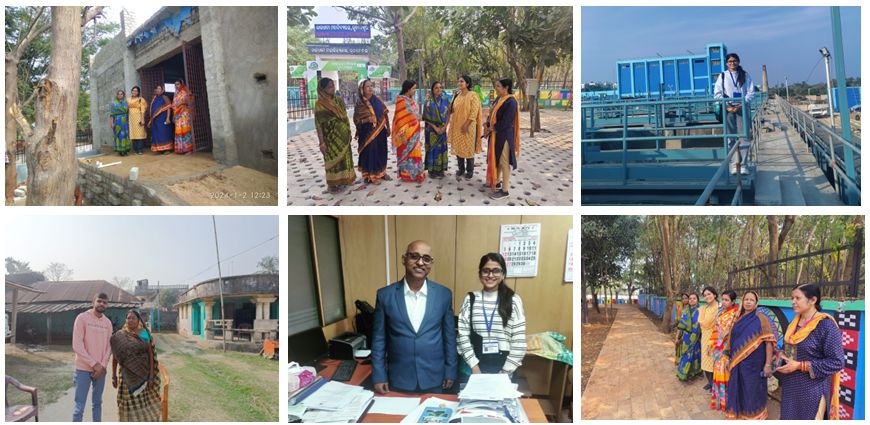
MPPG BATCH 2023-2025
| SL NO. | NAME | LGIP PROJECT DETAILS |
|---|---|---|
|
1
|
Aman Kashyap |
Functioning and Governance of Chanka Gram Panchayat: Assessing Inclusivity, Community Participation, and Local Development, Bihar |
|
2
|
Jayeeta Karmakar |
Empowering Communities & Navigating Local Governance: A Journey Into Municipal Corporation Dynamics, Bhubaneswar, Odisha |
|
3
|
Ritwik Raj |
Inclusive and Sustainable Urban Development through MUKTA: A Case Study of Angul Municipality, Odisha |
|
4
|
Ushasi Basu Roy Chowdhury |
Policies undertaken in Kolkata Metropolitan Development Authority, (KMDA), Kolkata |
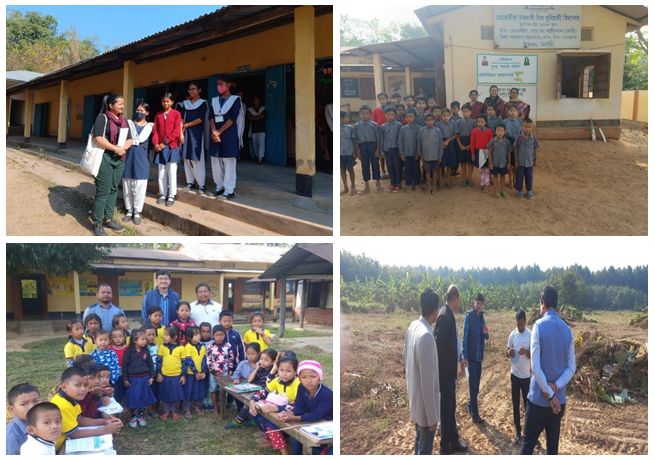
MPPG BATCH 2022-2024
| SL NO. | NAME | LGIP PROJECT DETAILS |
|---|---|---|
|
1
|
Abhisek Ghose |
Assessing Local Governance Practices in Cuttack Municipal Corporation, Odisha |
|
2
|
Khyatee Kashyap |
Understanding Local Governance in Tetelia Gram Panchayat, Assam |
|
3
|
Sunanda Deb |
Urban Governance and Service Delivery in Kolkata Municipal Corporation, West Bengal |
|
4
|
Thairingdao Hojai |
Rural Development and Local Governance in Boko Block, Assam |
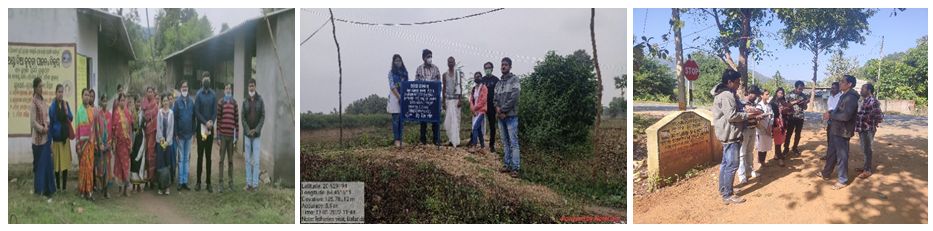
MPPG BATCH 2021-2023
| SL NO. | NAME | LGIP PROJECT DETAILS |
|---|---|---|
|
1
|
Anirban Das |
Understanding Governance Mechanisms in the Gram Panchayats of Boudh District, Odisha |
|
2
|
Bishal Kumar Banchhur |
Exploring the Functioning of Gram Panchayats in Boudh District, Odisha |
|
3
|
Harsimran Kaur |
A Study of Local Governance Structures in Boudh District, Odisha |
|
4
|
Meheli Roy Choudhury |
Governance Practices and Local Administration in Boudh District, Odisha |
|
4
|
Rituraj Kumar |
Examining the Role of Gram Panchayats in the Governance of Boudh District, Odisha |
|
5
|
Soham Pariksheet Mishra |
Assessing the Governance Framework across Gram Panchayats in Boudh District, Odisha |
|
6 |
Vanshika Singh |
An Analysis of Decentralized Governance in Boudh District, Odisha |
MPPG BATCH 2020-2022
| SL NO. | NAME | LGIP PROJECT DETAILS |
|---|---|---|
|
1
|
Aiswariya Pandey |
Understanding Local Governance: A Study of Biruda Gram Panchayat, Nayagarh district, Odisha |
|
2
|
Aman Tirkey |
Understanding Local Governance: A Study on the Working of Kishore Prasad Gram Panchayat, Nayagarh district, Odisha |
|
3
|
Prajapati Arohi Girishbhai |
Women Empowerment through Self-Help Groups: A Case Study of Kalikeshwar SHG in Kusi Village, Panasa Gram Panchayat, Jajpur district, OdishaWomen Empowerment through Self-Help Groups: A Case Study of Kalikeshwar SHG in Kusi Village, Panasa Gram Panchayat, Jajpur district, Odisha |
|
4
|
Don Prem Lobo |
Case Study: Woman Sarpanch of Rasanga Gram Panchayat, Gania Block, Nayagarh district of Odisha |
|
4
|
Sagar Jena |
A Study on the Development Process of Nathasahi Gram Panchayat, Jajpur district, Odisha |
|
5
|
Sharath B |
A Study on the Working of Kishore Prasad Gram Panchayat with Reference to Intersectoral and Inter-Departmental Coordination, Nayagarh district, Odisha |
|
6 |
Yukti Jain |
An Analysis of Local Governance Practices in Biruda Gram Panchayat, Nayagarh district, Odisha |